😎 About Me – Scott, Cognitive Model Developer
Hey there! I’m Scott — part researcher, part developer, part neural network tinkerer.
I spent my graduate education focused in cognitive psychology, trying to understand how the brain works, and how to use software to build artificial neural network models.
I pursued software development after grad school, and I used my skills in writing code to improve my passion project: building an artificial brain system that can control an autonomous agent.
Over the years, I've built a toy cognitive model that controls both a virtual agent and a humanoid robot.
I'm using this site to show my key takeaways from my Research in cognitive science as well as my highlights from my Development projects.
Hope you enjoy!
🧠 Cognitive Neuroscience Research
I focused my graduate studies around how decision-making emerges in the prefrontal cortex, amygdala, and basal ganglia. I tried to tie together leading theories of goal-driven executive function, reward learning, and conflict detection into a basic model that could be implemented in code.
Research Highlights:
- Simple neural networks can be used to represent individual modules in the prefrontal cortex (PFC)
- The basal ganglia is looking for matches of representations from PFC and perception to initiate motor plans
- Emotions are states of the system detecting key points of progress in the effort of obtaining a goal
- The "Still-Face" experiment in children shows a great cascade of emotion states
- Intelligent systems need more than just RL algorithms and more than just deep learning nets
- The PFC has middle (medial) and outside (lateral) regions that can represent goal "progress" states and "targets" in the world, respectively
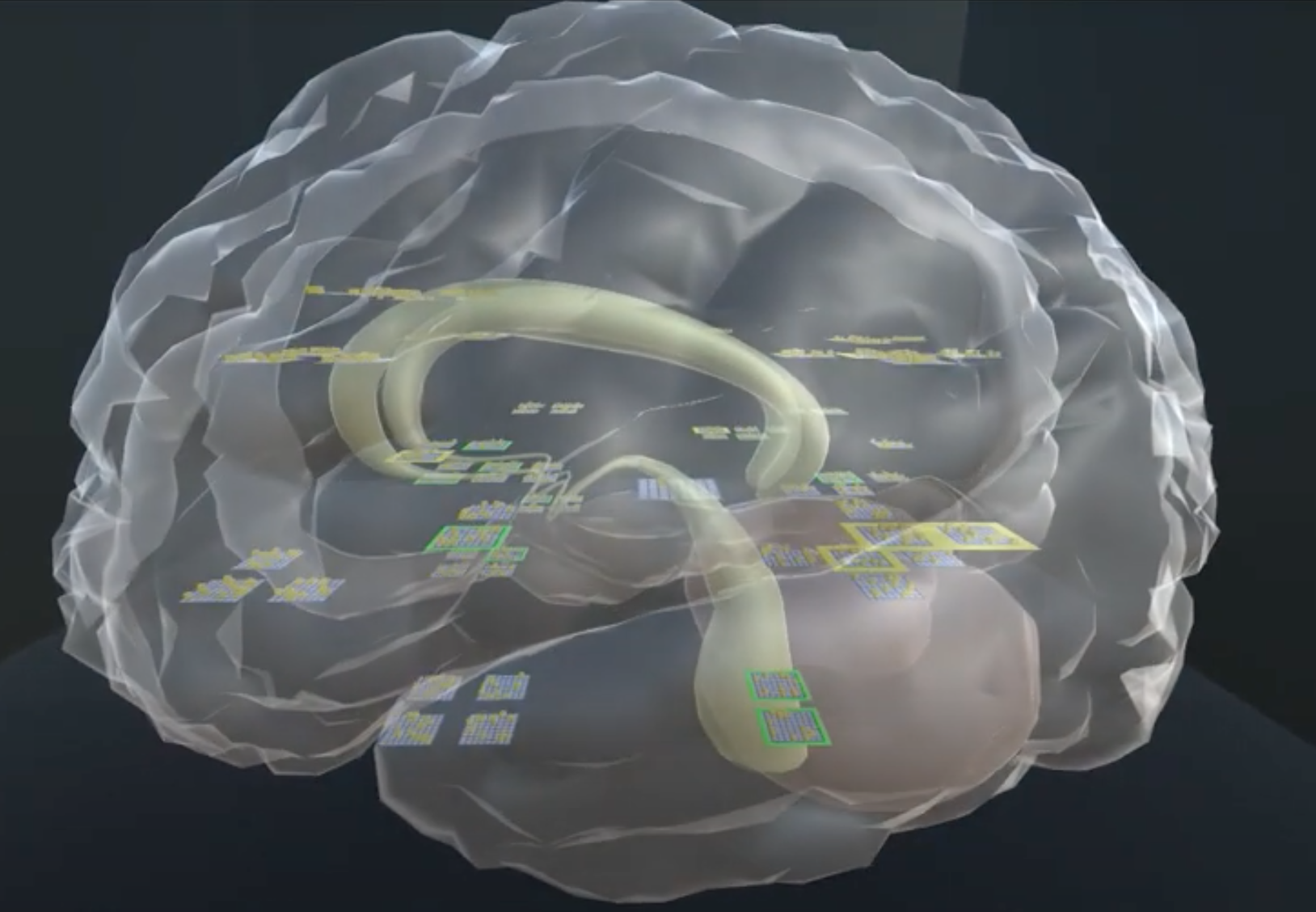
Check out the research: Human Emotion Model
🤖 Cognitive Model Controlling Humanoid Robot
With a toy model design of a brain system, I wrote a Python application that collects sensory inputs and drives behavior in virtual and physical systems.
Project Highlights:
- Goal-driven behavior requires sensory input and body need state input
- A goal tracking (emotional) system allows an agent to find new approaches to goals when obstacles appear
- Having learned from its world, the model-driven virtual agent "figured out" how to use a tool
- The emotion model-driven humanoid robot demonstrates fundamental social interaction skills
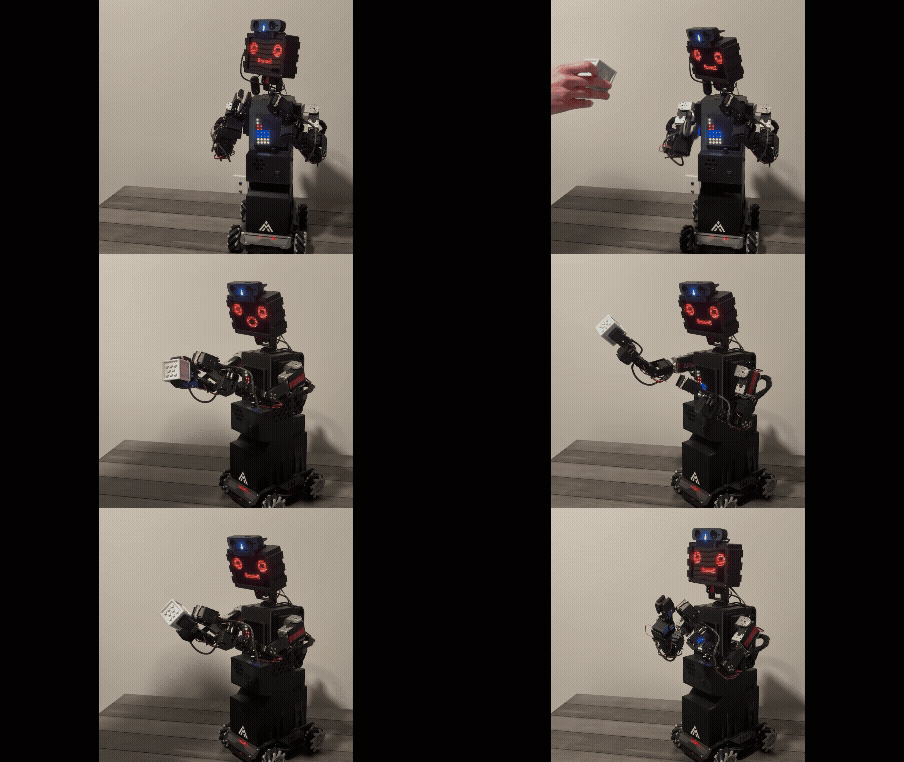
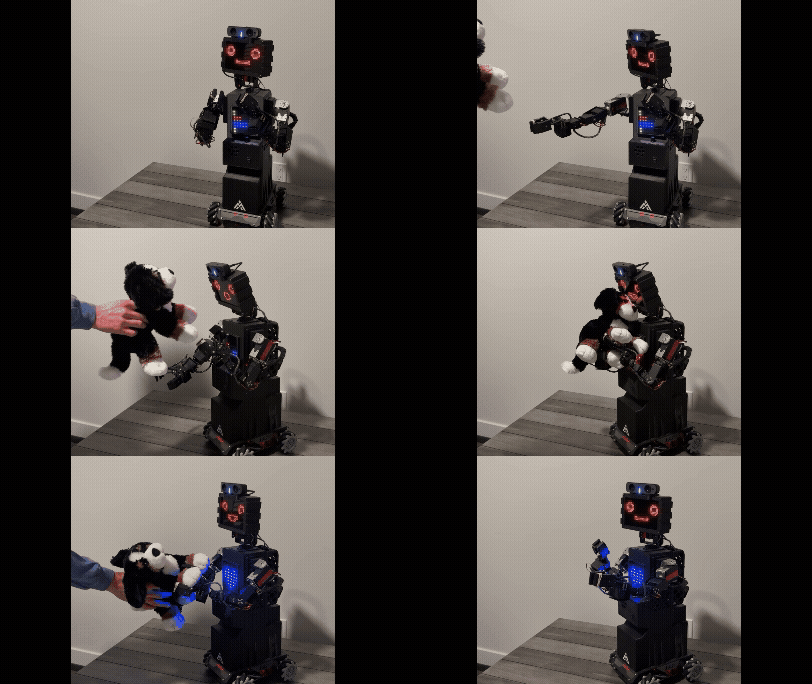
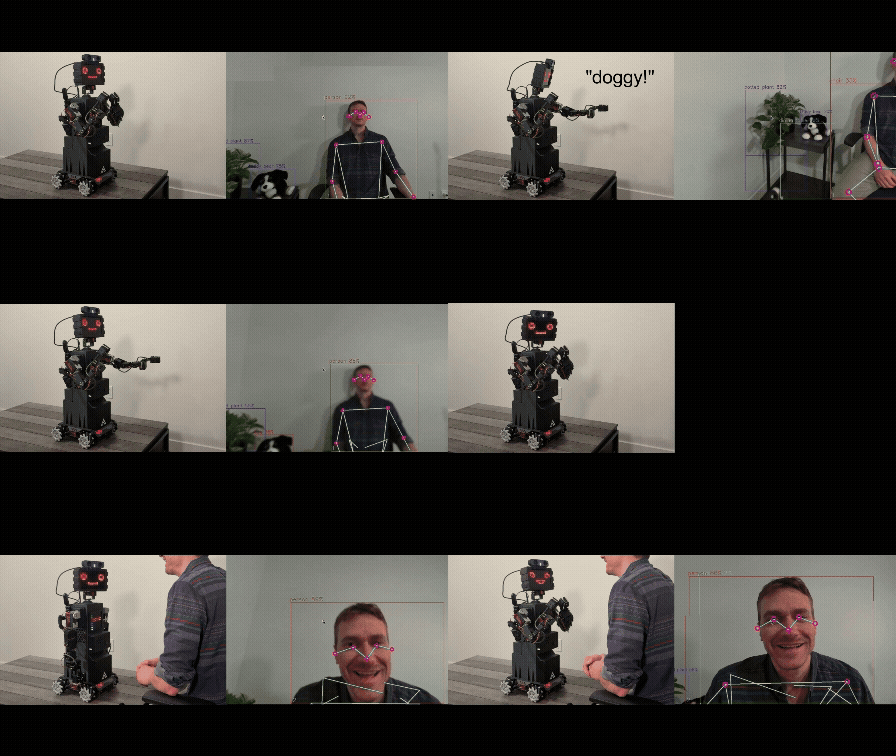
Check out the robot: Human Emotion Model in Humanoid Robot